SKU vs. UPC: What's the difference?
25 November 2026 · 5 min read
25 November 2026 · 5 min read
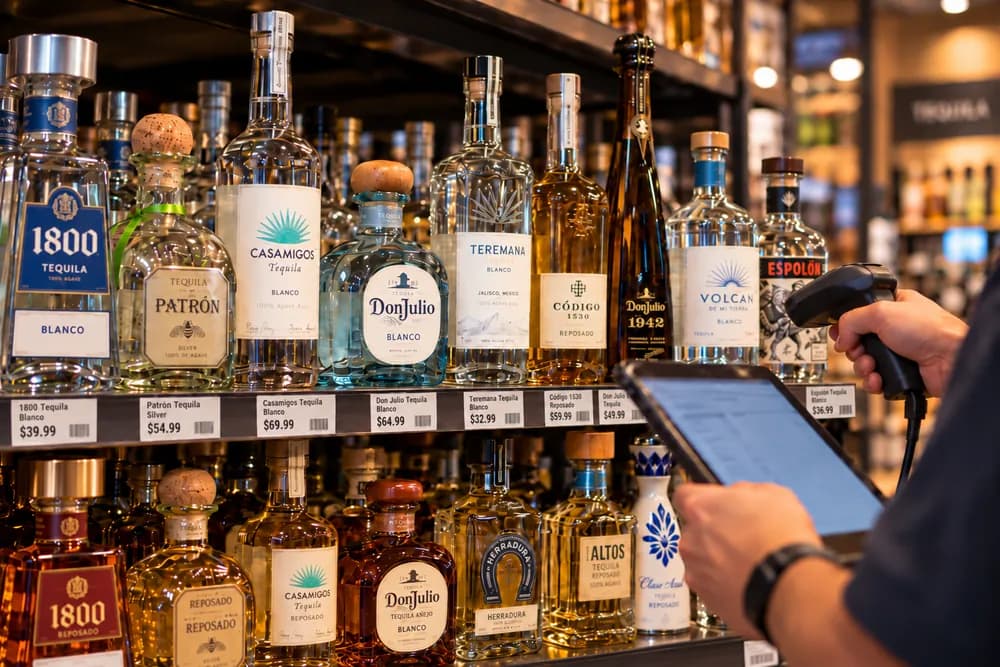
Every product in your store has at least two identities: the barcode on the package and the code your team uses to track it. Knowing the difference between a UPC and a SKU makes receiving, counting and reordering much simpler.
A SKU, or stock keeping unit, is an internal code a retailer assigns to each product it sells. You decide the format, and it often includes the brand, product type and size, so staff can tell what it is at a glance.
SKUs are unique to your business. Two stores can sell the same bottle of bourbon under completely different SKUs.
Each sellable version gets its own SKU. A 750 mL bottle and a 1.75 L bottle of the same spirit are different SKUs, and so are a single can and a four-pack.
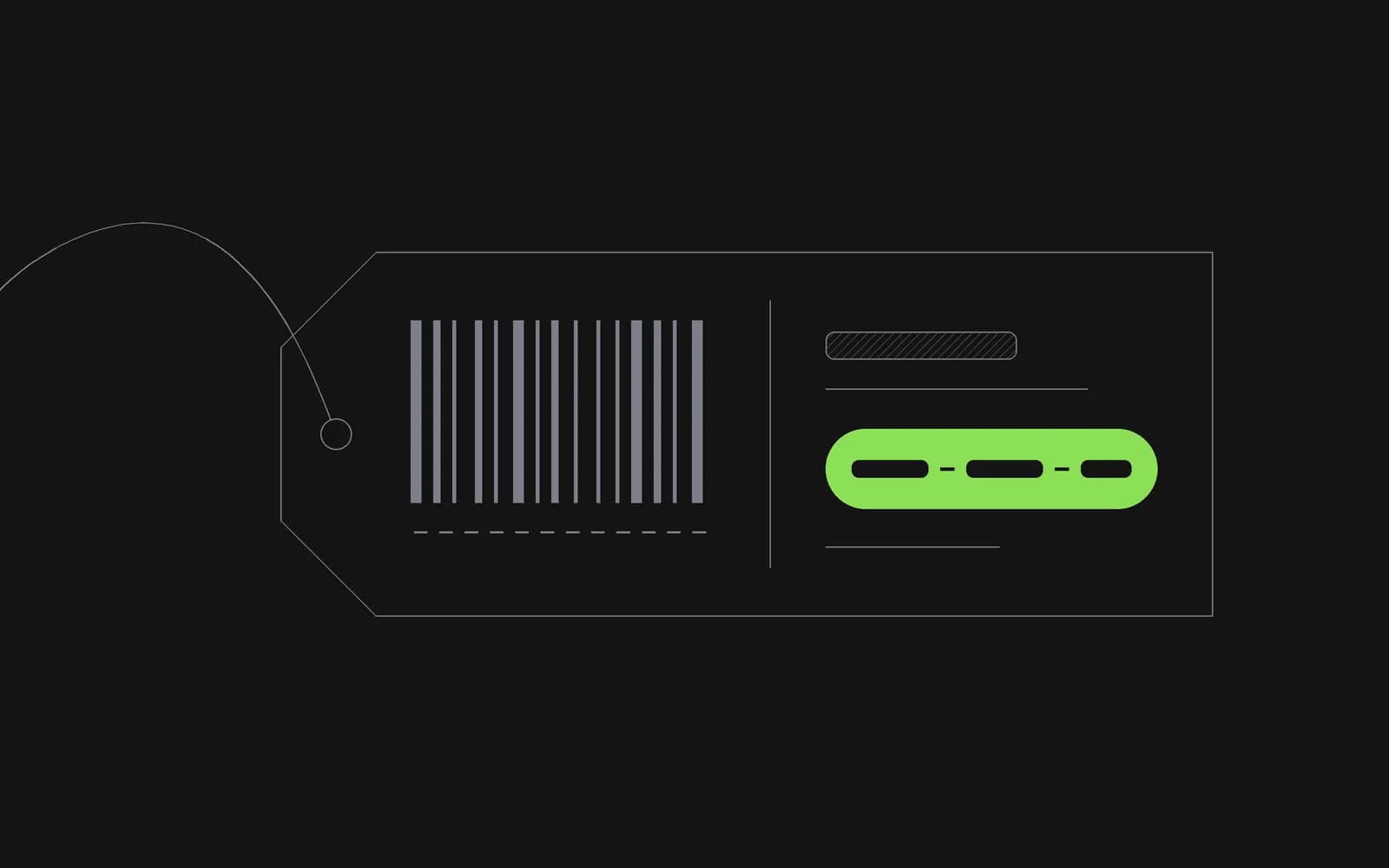
A UPC, or Universal Product Code, is a 12-digit number printed under the barcode on a product's packaging. The manufacturer assigns it using a company prefix from GS1, the organization that manages barcode standards, so the same product carries the same UPC everywhere it's sold.
Products made outside North America often carry a 13-digit EAN instead. Most retail scanners read both.
| SKU | UPC | |
|---|---|---|
| Who creates it | Your store | The manufacturer, through GS1 |
| Format | Any format you choose | 12 digits |
| Unique to | Your business | The product, across all stores |
| Main use | Organizing, counting and reordering inventory | Scanning at checkout and receiving |
| Changes when | You restructure your catalog | The manufacturer changes the product or packaging |
At receiving, staff scan each product's UPC, and the POS matches it to the right SKU, so the count lands on the right item.
At checkout, cashiers scan the UPC instead of searching for the product, which keeps lines moving and avoids ringing up the wrong size.
In reports and reorders, you work with SKUs, because they reflect how your store groups and buys products, including case and single-unit versions.
A few situations need extra care:
Many cannabis products don't carry a manufacturer UPC, and the industry has no universal SKU, so the same product can have a different code in every store. Instead, cannabis inventory relies on the state tracking tag. In Metrc states that's the package tag, and in BioTrack states it's the barcode ID. Dispensaries tie each package tag to a SKU in their POS, so every sale reports to the state correctly.
Scannable product codes help close the gap. See how Metrc Retail ID works with Flowhub, and how Lucid Green integrates with Flowhub.
Flowhub tracks inventory by SKU, location and selling unit, with barcode and UPC scanning at the register, UPC lookup and barcode labels. Teams can create and update SKUs in bulk with a CSV upload, and batch scan SKUs and package tags in Stash to speed up counts.

Annie joined Flowhub in 2018 as its founding marketer and helped grow it into the world's most intelligent commerce platform. She's a B2B SaaS marketer, cannabis advocate and water connoisseur who loves building compounding systems and lovable brands. Say hi on LinkedIn.
Free yourself from busywork. Flowhub's agents handle the routine, so your team can focus on customers.