Sweed alternatives for multi-location dispensaries in 2026
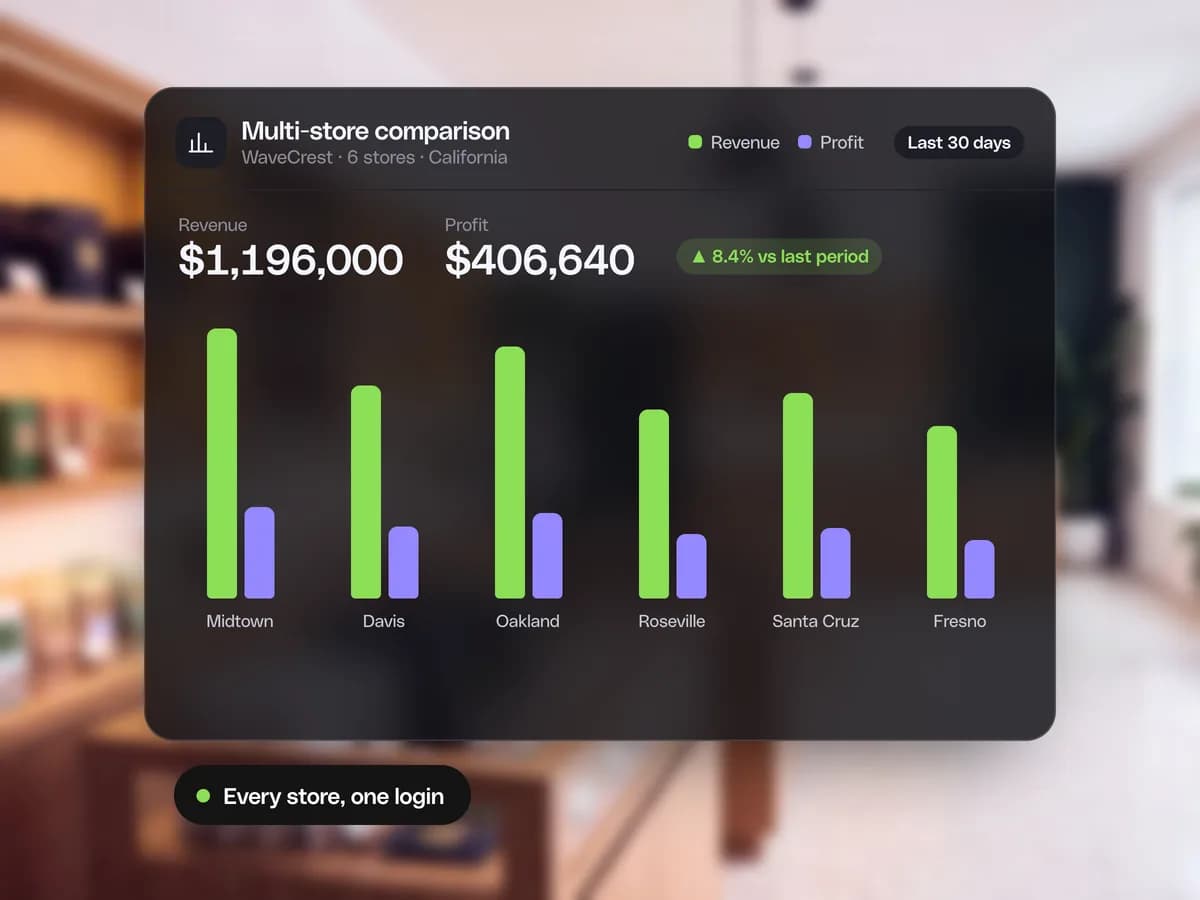
TL;DR: Sweed can be a good fit for dispensaries that prefer an all-in-one system. As operations grow, some retailers start looking for more flexibility around integrations, data access, reporting, ecommerce, payments, and emerging technologies like AI.
For multi-location dispensaries evaluating a Sweed alternative, Flowhub is a strong choice for operators prioritizing centralized operations, cannabis-specific compliance, and the flexibility to connect additional technology as their needs change.
Cova, Treez, and Blaze are also worth evaluating depending on your requirements.
This guide covers what to compare, where the major alternatives differ, and what to expect if you decide to switch.
What is Sweed?
Sweed is a cannabis retail platform that brings POS, inventory, ecommerce, payments, loyalty, marketing, delivery, and analytics into one system.
For operators that want to keep most of their technology with one vendor, that can be a real advantage. There are fewer systems to manage and fewer integrations to troubleshoot.
The question is what happens when you don’t want everything from the same vendor. An integrated suite is convenient when you want the products inside it. It becomes more restrictive when your team prefers a different loyalty platform, analytics tool, ecommerce experience, payment option, or AI assistant.
That distinction matters for growing retailers. You are not only choosing the software you need today. You are deciding how much freedom you will have to change individual parts of your stack later.
During a Sweed evaluation, ask how much freedom you have when you want to replace just one part of the stack. Can you keep a preferred third-party provider? Can you connect a new AI tool as it emerges? Can you change one component without changing the commercial package around it? Do you still pay for features you don’t need? Those answers matter more than the number of features included on day one.
The important distinction is not simply whether a platform has integrations. It is how much choice the operator retains after signing.
That is usually when the conversation changes from:
Does our POS have the features we need today?
to:
Will our POS let us build the operation we want three years from now?
Why multi-location dispensaries start evaluating alternatives
Most operators do not switch POS systems because of one missing feature.
They start looking when everyday workflows become harder to manage across multiple stores.
Maybe reporting requires too many exports. Inventory visibility is fragmented. Marketing wants a different tool. Finance wants better access to underlying data. An acquisition brings stores with a different technology stack.
At that point, flexibility becomes part of the POS decision.
A growing retailer should be able to change one part of its technology stack without having to rethink the whole thing. If you find a better loyalty platform, you should be able to use it. If your finance team standardizes on a particular BI tool, your POS should not stand in the way. If a better AI model launches next year, you should not have to wait for your POS vendor to decide whether to support it.
The question is not simply how many features a platform includes. It is how much choice you retain after you sign.
For multi-location retailers, it’s worth evaluating how easily a platform can adapt as the business changes.
What to evaluate in a Sweed alternative
Feature lists are useful, but some decisions are much harder to change after implementation.
Use these questions during the evaluation process.
| What to evaluate | What to ask | Why it matters |
|---|---|---|
| Data access | Can we export our data in a usable format when we need it? | Your reporting and technology needs will change over time. |
| API and integrations | What third-party systems can we connect, and what API access is available? | Integrations become more important as operations get more specialized. |
| Centralized inventory | Can we see inventory across every store from one place? | Multi-location purchasing and transfers should not require manual reconciliation. |
| Cross-store reporting | Can we compare stores, products, categories, and employees without exporting data first? | Reporting should get easier as you add stores, not harder. |
| Compliance | How are Metrc, BioTrack, and state-specific requirements handled? | Compliance workflows need to remain consistent across locations. |
| Checkout workflows | How quickly can employees complete common transactions? | Small inefficiencies compound at high-volume stores. |
| Training | How quickly can a new employee become comfortable with the system? | Staff onboarding is an ongoing operating cost. |
| Ecommerce | Does ecommerce use the same inventory source as the POS? | Fewer systems means fewer opportunities for inventory discrepancies. |
| Payments | What processing options are available? | Payment requirements can change over time. |
| Hardware | Which devices can we keep and which need to be replaced? | Hardware can materially change the cost of switching. |
| Support | What happens when we need help during nights, weekends, or major sales days? | Support becomes more important as store count increases. |
| Migration | Who owns each step of implementation and rollout? | Multi-store migrations need clear ownership and sequencing. |
| Contracts | How do renewals and additional locations affect pricing? | Long-term economics matter as much as implementation cost. |
| Product choice and bundling | Can we buy only the products we need, or do we have to adopt a broader suite to get the functionality or pricing we want? | You should not have to replace tools that already work just because you are changing POS systems. |
| Data residency and access | Which cloud regions hold our data, which subprocessors process it, and from which countries can employees or contractors access production systems? | Regulated retailers should understand not just who owns their data, but where it is processed and who can access it. |
Before sitting through vendor demos, identify the dispensary KPIs your team actually uses.
Then ask every provider to show you how to get those answers inside the product.
Best Sweed alternatives for multi-location dispensaries
There is no single platform that fits every cannabis retailer.
The best choice depends on how your stores operate today and how much flexibility you expect to need as the business grows.
1. Flowhub
Best for: Multi-location operators that want a unified cannabis retail platform with flexibility around integrations and data
Flowhub is a point-of-sale and retail management platform built specifically for dispensaries and multi-location cannabis retailers.
It brings POS, inventory, ecommerce, payments, reporting, and cannabis compliance workflows together in one platform.
Flowhub also provides APIs and integrations for operators that want to connect additional technology to their retail stack.
That combination makes Flowhub a solid choice for retailers that want centralized operations without making their POS the limit of what they can build.
For operators evaluating a move from Sweed because they want more flexibility around data, integrations, ecommerce, or new technology, Flowhub should be at the top of the shortlist.
2. Cova
Cova is an established cannabis POS platform and another option for operators comparing multi-location systems.
When evaluating Cova, focus on the workflows that matter most to your operation: reporting, integrations, inventory management, compliance, ecommerce, and support.
3. Treez
Treez is another cannabis retail platform commonly considered by larger and multi-location operators.
If your business already relies on several outside systems, pay close attention to integrations, data access, reporting, and how those systems fit into your existing stack.
4. Blaze
Blaze offers cannabis retail technology across a broad range of operational workflows, which can make it appealing to operators looking to consolidate more of their technology under one provider.
Before switching, operators should understand how much flexibility they’ll retain once Blaze becomes embedded in their business. Look beyond whether an integration exists and ask how deeply it works, who controls the customer and operational data, how easily that data can be exported, and whether you can continue using the ecommerce, payments, analytics, and other tools you prefer.
Why Flowhub is a strong Sweed alternative
Flowhub is a strong Sweed alternative for operators that want the convenience of a unified retail platform while maintaining flexibility around integrations and data.
Its core strengths for multi-location retailers are straightforward.
Centralized retail operations
Flowhub combines POS, inventory, ecommerce, payments, reporting, and compliance workflows in one system.
For multi-location teams, that provides a common operational foundation across stores while reducing the number of disconnected systems employees have to manage.
Inventory and ecommerce on the same platform
Flowhub Ecommerce works with the same retail platform that manages store inventory.
That makes it easier to keep online availability aligned with what is actually happening in the store.
For operators comparing ecommerce options, ask every vendor whether online ordering and in-store sales rely on the same inventory source or require separate systems to stay synchronized.
Integration flexibility
Flowhub provides APIs and integrations that allow operators to connect additional technology as their needs change.
That matters when a retailer wants to add specialized marketing, analytics, finance, loyalty, ecommerce, or operational tools without replacing the underlying POS.
Pay for the stack you actually want
Flowhub’s à la carte approach lets operators choose the Flowhub products they need and combine them with products from other companies, rather than assuming every retailer should use the exact same technology stack.
That makes price comparisons more useful, too. Compare the cost of the technology your business will actually use, not just the price of two bundles with different products inside them.
Your AI should be your choice
Flowhub also offers an MCP connector that lets operators use Flowhub data with MCP-compatible AI tools.
Flowhub believes your AI strategy should not be dictated around your POS vendor’s AI roadmap. If your team prefers one MCP-compatible AI today and another later, the underlying Flowhub connection does not have to change.
The larger point goes beyond AI: retailers should be able to choose the technology that works best for their business rather than wait for one software company to build every tool they need.
New sales channels
Flowhub's Text-to-Order AI allows customers to shop by text using Flowhub Ecommerce.
For multi-location operators, the more important point is that new purchasing experiences can operate on top of the same retail and inventory platform rather than creating another disconnected system.
Choosing the right POS for your next stage of growth
If Sweed is working for your business, switching just for the sake of switching is probably not worth it.
A POS change touches nearly every part of retail operations: inventory, compliance, employees, reporting, payments, ecommerce, and customers.
The move should solve a meaningful problem.
An all-in-one platform asks how much of its stack you will use. An open platform asks what stack you want to build.
For operators that value choice, the goal is not to collect the most software from one vendor. It is to keep the freedom to choose the best products for each part of the business and change them as your needs evolve.
For a growing multi-location operator, the most important questions are often:
- Can we get to our data?
- Can we connect the tools we need?
- Can we choose which products we pay for?
- Can we manage every store from one platform?
- Can our teams use it without creating more manual work?
- Can the technology adapt as our business changes?
- Flowhub is built around those requirements.
It combines cannabis POS, inventory, ecommerce, payments, reporting, and compliance workflows in one platform while giving operators the ability to extend the system with additional integrations and technology.
For multi-location dispensaries evaluating a Sweed alternative, that makes Flowhub a strong place to start.
Frequently asked questions
Flowhub is a strong Sweed alternative for multi-location dispensaries that prioritize centralized operations, cannabis-specific compliance, data access, and integration flexibility.
Flowhub combines POS, inventory, ecommerce, payments, reporting, and compliance workflows in one cannabis retail platform.
Cova, Treez, and Blaze are also worth evaluating depending on the specific needs of your operation.
Operators may start evaluating alternatives when their business needs change.
Common reasons include needing better cross-store reporting, more control over data, different integrations, additional ecommerce options, new payment requirements, or technology that can adapt as the business adds locations.
An all-in-one platform emphasizes using products from one vendor. An open platform is designed to let operators combine the core POS with third-party products, integrations, and data tools.
For retailers that want to choose their own ecommerce, loyalty, analytics, or AI tools, openness can preserve more flexibility as the business grows.
Flowhub is designed around that choice: operators can use Flowhub products where they fit and connect third-party technology where they prefer another option.
Prioritize:
Cannabis compliance
Centralized inventory
Cross-store reporting
Data access
APIs and integrations
Ecommerce architecture
Payment options
Ease of training
Support
Migration planning
The best evaluation method is to bring real workflows into each vendor demo and ask to see them completed in the product.
Flowhub provides APIs and integrations that allow operators to connect additional technology to their retail platform.
If a specific integration is important to your business, confirm its current availability and implementation requirements during the evaluation process.
Flowhub offers an MCP connector that allows Flowhub data to work with MCP-compatible AI tools.
This gives operators a way to use their retail data beyond AI features built directly into the POS itself.
You may also like...

Sell freely. Scale fearlessly.
Free yourself from busywork. Flowhub's agents handle the routine, so your team can focus on customers.